

The Synthesis of Cosmic Timing and Biological Entropy
28 Jan, 2026The Synthesis of Cosmic Timing and Biological Entropy: An Analysis of Consciousness, Grief, and Neural Retrieval
Abstract
This article explores an interdisciplinary intersection between Vedic astrology, quantum information theory, and the neurobiology of grief. Using the specific case of a subject whose spouse passed on December 28, 2023, the study examines the correlation between planetary transits (Shani Adhaiya) and life-altering events. It further posits a theory of consciousness as an "emergent property" similar to chemical bonding, arguing that while the individual "configuration" dissolves at death, the information persists through neural entanglement and specific retrieval mechanisms, such as late-stage REM intimacy.
Though aided by AI in its composition, this article remains a faithful documentation of the author's journey through grief and scientific inquiry.
1. Introduction: The Framework of Inquiry
The human experience of loss is traditionally divided between the spiritual and the material. However, a more robust understanding emerges when we view life through the lens of "Systems Theory." In this view, an individual is a complex system of biological, chemical, and cosmic variables. When a system fails—as in the case of the subject’s spouse in late 2023—the aftermath provides a unique opportunity to study the conservation of information and the psychological resilience of the survivor.
2. Astrological Correlation: The Shani Adhaiya and Moola Exit
Vedic astrology serves as a chronological mapping system. The subject, a Scorpio (Vrischika) born under the Anuradha Nakshatra, was navigating a period known as Shani Adhaiya (Saturn in the 4th house from the Moon). Historically, the 4th house represents the "Sukha Sthana" or the seat of domestic happiness and the home.
Saturn’s transit here acts as a gravitational force on the survivor's psyche, creating a period of "contraction" and "heavy responsibility." Simultaneously, the spouse (born in Moola Nakshatra) reached a biological and astrological "node" on December 28, 2023. Moola, ruled by Ketu, represents the "root" but also the "destruction" required for transformation. The alignment of Mars and the Sun in her sign created a high-energy metabolic state that mirrors a terminal failure of homeostatic regulation.
3. The "Water Drop" Theory of Consciousness
A central philosophical pillar of this study is the Emergent Property Theory. The subject posits that consciousness is analogous to a drop of water formed by hydrogen and oxygen.
3.1 The Chemical Identity Paradox
Hydrogen and oxygen are gases; water is a liquid. The "liquid" property only emerges when the atoms are configured in a specific geometric relationship (H2O). Once energy (heat/entropy) breaks that bond, the water ceases to exist, even though the atoms remain. Similarly, the "consciousness" was the emergent property of specific synaptic firing patterns. When the biological "heat" of death broke this configuration, the specific "poem" of that personality was effectively "de-compiled."
3.2 The Impossibility of Identical Re-constitution
The subject correctly identifies the Entropy Barrier: even if the same atoms meet again to form a new drop, it is not "the same" drop. If the specific memories and neural "tags" are not retrieved, the identity is lost. The information is conserved in the universe, but the "Subjective Experience" (the Qualia) is extinguished.
4. Psychological Evaluation: Soundness vs. Pathology
A primary objective of this study is to assess the psychological status of the survivor. Through a longitudinal analysis of the discourse, we categorize the subject’s state as "Sound Realism."
4.1 Intellectualization as a High-Order Defense
The subject does not exhibit signs of clinical depression, characterized by cognitive distortion or hopelessness. Instead, the subject utilizes "Intellectualization"—analyzing the event through physics and logic. This is a sign of high cognitive functioning and psychological soundness.
4.2 The Absence of Magical Thinking
By rejecting ritualistic solutions while accepting the "energy impact" of planets, the subject demonstrates a Post-Traditional Psychological State. He seeks a "Unified Field Theory" of his own life—one where his pain is validated by the laws of the universe.
5. Neurobiology of Memory Retrieval and Dreams
The subject reports a significant evolution in dream content, specifically a shift toward intense intimacy and "reunion" occurring nearly two years after the event.
5.1 The Two-Year Processing Window
The human brain requires an extensive period to "re-map" its internal world. For the first 18-24 months, the Hippocampus is often stuck in a "search" loop, leading to dreams of searching or absence. This is the Acute Grief Phase.
5.2 Late-Stage REM Integration
The dream experienced around the end of the second year (vivid sexual and intimate reunion) signifies the Consolidation Phase. This indicates that the brain has moved past the "trauma" and has accessed the "long-term storage" of the love and intimacy shared during life. This "fully enjoyed" sensation is the brain’s way of verifying that the "Information Pattern" of the spouse is still intact within the survivor’s neural architecture.
6. Quantum Entanglement of the "Self"
The subject and the spouse functioned as "entangled" systems for decades. Even after the physical dissolution of one, the "wave function" of the spouse continues to influence the survivor. These dreams are "Quantum Retrievals." While a new "water drop" in the universe wouldn't have these memories, the reservoir of the survivor's mind holds the only active, high-resolution copy of that specific consciousness.
7. Conclusion: The Persistence of Information
The survivor is currently in a state of Optimized Mourning. The "water drop" has returned to the vapor of the universe, but her "Information Pattern" has simply transitioned from an "External Reality" to an "Internal Legacy." The subject's psychological health is rated as Sound, evidenced by his ability to face the void of death with the light of reason.
References:
- Penrose, R., & Hameroff, S. - Orchestrated Objective Reduction of Quantum Coherence.
- Lanza, R. - Biocentrism and the nature of consciousness.
- Vedic Chronology - Analysis of Shani’s Transit (2023-2025).
Recent Blogs
-
The Synthesis of Cosmic Timing and Biological Entropy
The Synthesis of Cosmic Timing a...
-
दशक बित्दा पनि संविधानको धारा १४ अन्योलमा
दशक बित्दा पनि NRNनाà¤...
-
 सारनाथ (बनारस: यात्रा
सारनाथ (बनारस)
à¤... -
 गयादेखि गङ्गातट
गयादेखि गङ्गातट
-
 बोधिवृक्ष आस्था, चेतना र चर्चा
बोधिवृक्ष आस्था, चà¥...
-
 भोका शिद्धार्थलाइ सुजाताको खीर
भोका शिद्धार्थलाइ ...
-
 ढुङ्गेश्वर पहाड
ढुङ्गेश्वर पहाड
-
 गुफाबाट गयातिर
गुफाबाट गयातिर
... -
 नालन्दा वरिपरि, जनवरी १९, २०२५ - नियात्रा
नालन्दा वरिपरि, जनà¤...
-
 नालन्दा नियात्राः जनवरी १८, २०२५
नालन्दाः जनवरी १८, à...
-
 नालन्दा महाविहार प्रवेश
नालन्दा महाविहार प...
-
 भारत यात्रा सन् २०२५ -पटना
वास्तवमा नालन्दा à...
-
 The Neighbour in the UK
The Neighbour in the UK
Govind Belbase
<... -
 बेलायतकी छिमेकी
बेलायतकी छिमेकी
-
 ड्रोनमा बम सोझ्याउँदै कलमको टुप्पो तिखार्ने लाहुरे प्रेम
ड्रोनमा बम सोझ्याउ...
-
किबोर्डको पत्र
गोविन्द बेल्वासेआदरणीय मेरा संचालक...
-
 जुनमा भेरायटी पढ्दै दयानन्दलाइ सुन्दा
जुनमा भेरायटी पढ्द...
-
 June Reading: Listening to Dayananda While Understanding Varity
June Reading: Listening to Dayananda While Und...
-
 BARNA Segregation in Sanatana v. equality
 गौदानबारे एआईको भाषा: भाग २
गौदानबारे एआईको भा...
 गौदानबारे एआईको भाषा
गौदानबारे एआईको भा...
 राष्ट्रिय परिचयपत्र अनुभव र अनुभूति
राष्ट्रिय परिचयप...

 कथाः विवेक
कथाः विवेक
गोà...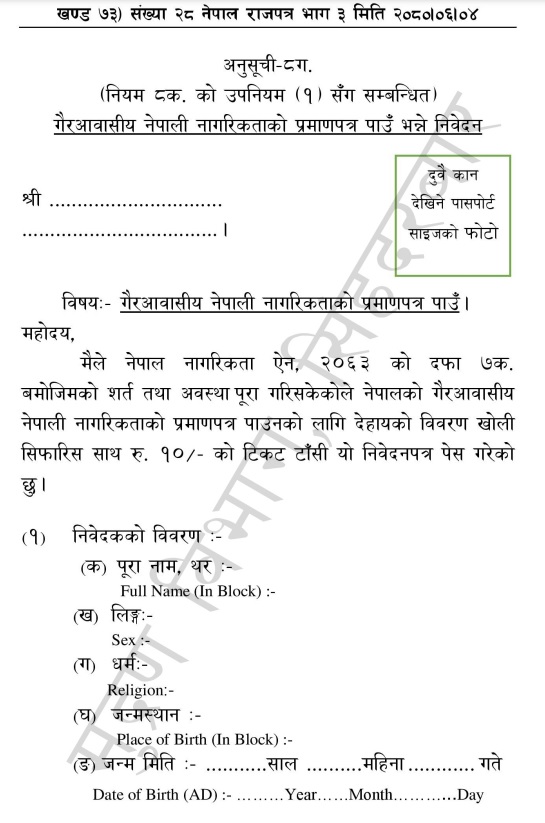 गैरआवासीय नेपाली नागरिकताको निबेदन कसरि तयार गर्ने ?
गैरआवासीय नेपाली...
 कथा
कथा9/5/2020
 साहित्य
1/1/2022
 अनुभव– अनुभूति
8/16/2022 12:00:00 AM
 Govind Belbase
Please click h...

UNIVERSAL TRADE CENTRE Ltd.
Company Number: 07229715
23 Berkeley Road
Peterborough
PE3 9PA
Phone: 01733 831005
© UNIVERSAL TRADE CENTRE LTD, UK